

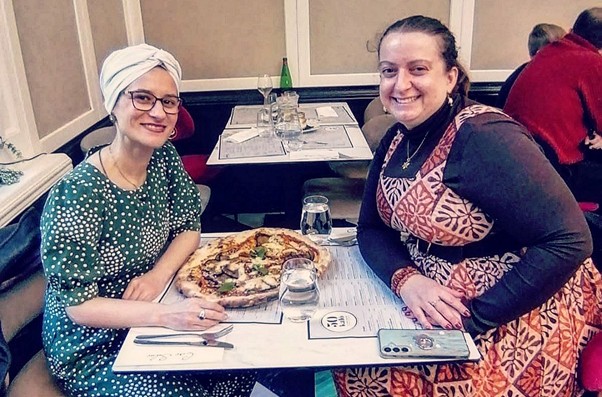
“If everybody looked the same,
We’d get tired of looking at each other”
You may or not may know these lyrics from the 1999 song “If Everybody looked the same” by Groove Armada.
I grew up listening to this song and remember quite strikingly the lyrics – as I’m sure many other people from my generation do. They’ve stuck with me for many a year.
“If everybody looked the same, we’d get tired of looking at each other”. Quite right. The world would be rather boring if we were all exactly the same, right?
Well, I definitely think so. And I’m not alone. The words aren’t unique.
“Variety is the spice of life” is another famous saying and is once again something which I very much agree with: value in diversity, appreciation of difference and celebration of diversity.
Anyone who knows me will say with certainty that these are values that I not only stand firmly with, but in fact base my life on.
And it think this ethos been perfectly clear over the festive period marking the end of 2025.
We’re now near the end of January 2026, almost a whole month into the new year, and the holidays are long gone. But not the message.
How? Well, let me ask you a question:
How did you spend the Christmas break?
Did you celebrate the birth of Jesus and perhaps go to church (you could be Christian)?
Did you get Chinese take away and watch films (you may be Jewish)?
Did you have a “halal Christmas” and spend the day with your family, eating a big lunch and resting? (a non-denominational popular choice across the board I think!).
Or did you not do anything unique and spend the day as you would every other?
Well, the answer is a mixed bag for sure here in the UK.
From cultural Christians, practising Christians, atheists, Hindus, Muslims, Jews – whatever our faith/cultural background – the discussion around what Christmas means in a multifaith, multicultural society such as the UK (or USA), has definitely grown over the years.
And I think it’s beautiful.
These discussions have outlined many realities in modern Britain:
We do have different religious beliefs. We do all have varied cultural backgrounds.
And (despite what extremists think), that’s ok!
Christmas 2025 I believe truly showed us how people choose to embrace difference and learn about each other.
Whether you decided to celebrate with those who do celebrate Christmas, to perhaps learn about a festival different to your own with a few festive treats, or simply to appreciate a day off but acknowledge and learn about what Christmas means for Christians and part of British culture and history, living in the UK, Christmas is quite hard to miss.
And it brings time for reflection.
Quite possibly the busiest time of the year in the UK, the festive period is a time where we see what (or any) role Christmas plays for a diverse society. And what it means – or doesn’t mean – for each and every one of us.
For some, it’s personal – religious and/or cultural, it’s part of their faith, their sense of self, their Britishness. And it counts.
For others, it’s cultural – a day of fun but not one that defines who they are in faith but as a member of British society, a fellow citizen or perhaps a learning experience as a newcomer from overseas.
In short: in modern Britain, Christmas means many different things to different people. And that’s ok.
This critically is part of my wider point: we’re all different, and that’s again ok!
As humans, we’re always going to be different – as siblings, among families, among communities and wider society.
We don’t need to believe in exactly the same thing, to celebrate the same festivals in exactly the same way, or to identity with a national holiday or every single aspect of our life identically too.
We need to focus on unity – and a sense of pluralism and respect for others – not uniformity and diminishing difference.
This is especially important during a time of increasing division in the UK, with growing attempts to divide communities, scapegoating others and pitting the nation against vulnerable individuals and minorities.
It’s undeniable how over the last year we saw a rise in Far-Right rhetoric, xenophobic narratives, alongside the ongoing scourge of religious extremism and increasing attacks on religious minorities.
We therefore need to stick together, but in both our commonality and diversity.
United in diversity: different routes, same destination
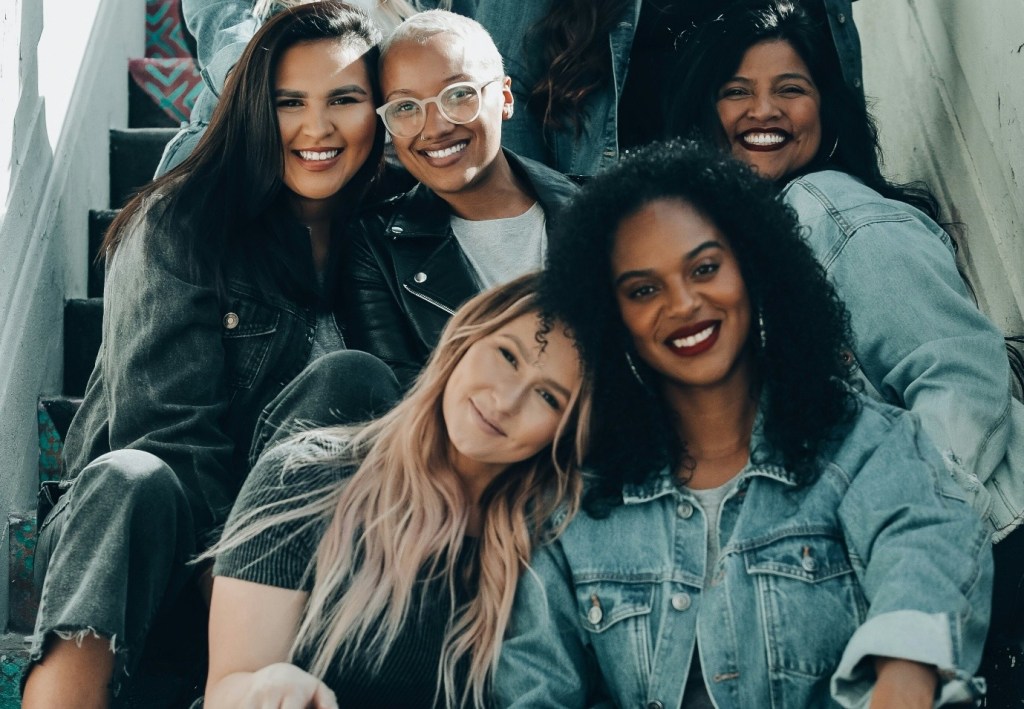
As we enter a new year, we tend to reflect on the past year and set our minds to what we want to achieve in 2026 and beyond. It’s a time of reflection, renewal and commitment.
With this is mind, I believe that this topic must be top of the agenda.
We can’t’ allow hateful narratives to fester, fearmongering to grow and for extremism in any form to be tolerated. And this mustn’t be done by attempting to erase difference.
Being British means many different things to each and every one of us in cultural, religious and social practice.
But what it should mean for us all is being one nation: a nation of acceptance, respect and not merely tolerance of diversity, but one that lies and thrives off it.
We’re a pluralistic nation and we must be proud of it.
We must stand united in our difference and unity. Not uniformity.
It’s this ethos that has underpinned 2025 for me and that I met during a rather inspiring conversation with a vicar on a recent trip to Pennant Mllangell in Wales.
Sat with a cup of tea and a plate of biscuits, we were sat in a group discussing interfaith dialogue and the church and its interfaith prayer garden.
Amid a rather engaging conversation, the vicar popped into the office and came back with a bag of shells – scallop shells to be precise. Why?
Well, the scallop shell is the symbol of the Camino de Santiago – a historic spiritual pilgrimage culminating in the pilgrim’s arrival in the Spanish city of Santiago de Compostela.
El Camino (The Way) as it’s known, is one of the world’s most well-known pilgrimages and is undertaken by Christians and non-Christians alike from all over the world. Its symbol is the scallop shell, with signs on the way bearing the shell symbol and pilgrims often donning the symbol as they walk.
Why? Well, there are many theories as to why the shell became the infamous symbol of the pilgrimage.
One explanation includes that as Pilgrims found their way to the Bay of Biscay (realising they were now in Spain), they would mark this moment by collecting a shell to gather water and remove the salt after a long journey (using the shells grooves).
They would then keep the shell and use it as a dish for food and water on their journey.

Practical and spiritual reasons abound, there are a multitude of stories. But what I found most interesting was, as our host explained, the symbolism of how the shell represented both diversity and unity.
Tracing the lines from the outer rim alongside the shell to its base, we’re reminded how pilgrims came to Spain using diverse routes, but to all reach the same destination: Santiago de Compostela.
In a wider spiritual sense, this translates to: we may all come from different (faith and cultural) backgrounds, but we’re all aiming for the same thing – to find God.
We’re on different paths, but all aiming for the same destination. That’s clear. And a great way to look at things.
However, what really stood out for me was the reverse: starting by taking the singular point of the base and looking at the grooves of the shell as they spread outwards on their own “groove” (path).
This I feel is a very important message – one that we don’t always want to hear or think about:
We all come from one source; we’re all human.
And we spread outwards onto our diverse unique paths; we’re all different
We’re all human, but doing things a little differently; not necessarily “better” or “worse”, just differently
Whether translated to: One God, many paths (religiously) or one humanity, many cultures (culturally), we’re a diverse – and should be equally – united globe.
Such diversity shouldn’t mean a lack of unity. And such unity, shouldn’t been a lack of diversity. We mustn’t aim for (or fear in the process) uniformity.
It was this analogy that perfectly depicts my own recent musings on diversity and unity, exactly because it’s healthy, refreshing and honest.
It’s also quite different from the often-used quote by the late Jo Cox in interfaith and intercultural settings: “We have more in common than that which divides us”.
Well, for starters, we do! I love that quote – as do many others.
No matter our ethnic origin, nationality, cultural background, faith, religion, belief or native language: we’re all human. And humans in an increasingly global world at that.
It’s true. I often say this myself. And it’s something we should remember and treasure.
But I’m also going to rock the boat a bit here and add: we’re not all the same. And that’s OK too!
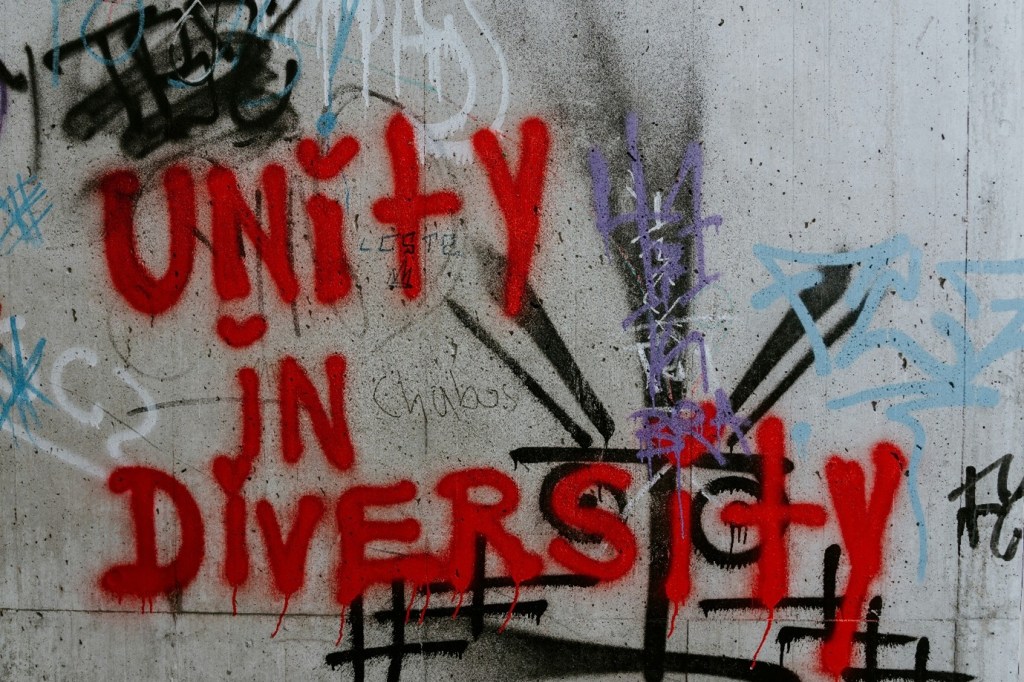
Diversity is something we should treasure – both outside and within our own communities.
Penning the title of this blog, I was later informed by a friend that “Unity in diversity” is in fact South Africa’s national ethos.
“United in diversity and purpose” highlights exactly how the often believed binary of sameness equals unity and diversity means division is naïve, out-dated, fragile unnuanced and self-defeatist.
It screams fear; fear of the “other” and an anticipation in difference fearing “clashes”, “threats” and “incompatibilities”, rather than sharing in commonalities, learning and growth.
It therefore also screams something much deeper: fear of change – the idea of discovering and developing oneself.
It relies upon a presumption of having to change either by force or growth, of a supposed “harm” in building new merging and adapting, co-existing realities or worse, of being forced to give up one’s identity.
And these fears aren’t healthy. Life is all about change. Nothing remains stagnant, we move, we grow, we progress.
Only in developing an identity based on a self-identifying defence of “others” or rigidity without nuance of time, context and therefore change, does difference, merging, sharing and change pose a threat.
Just as change is a natural part of life, so is diversity. Nothing can stay fixed forever. And no two people are the same – let alone an entire community.
Over my years working inside and outside of interfaith and intercultural settings and beyond, I know that it’s fear, lack of understanding or respect of difference that creates and sustains divisions and divides.
To break down these divides, we firstly need to remind ourselves of what we have in common, what we share: how we’re not different. And that’s great.
It doesn’t stop there either. We also need to also understand and appreciate difference.
I’ve sometimes come to sense a “fear of difference” in the air, which has translated into an anxiety pushing towards uniformity. And that’s not the way forward.
Dialogue isn’t about trying to make us all the same. It’s not about trying to change each other to have the same views. It’s about working to understand them. And also, to agree to disagree when we don’t.
Yes, we should be striving to build bridges recognising our shared values and interests, but also celebrating diversity and the freedom that each and everyone of us should have to be who we are and want to be on the journey on life – both within and amongst communities.
Why? Because, the truth is: diversity enriches our lives.
It brings difference perspectives, different lived experiences and varied ways of looking at things. And what’s more, no matter how much we agree with each other, we’ll never be, think or act exactly in the same way.
As humans, we’ll always hold different opinions, views, feelings, beliefs and wants and needs.
Whether stemming from our psychology, our faith, our culture or a combination of all of these: we are all unique individuals.
We are unique beings who also sit within diverse families, communities and wider societies.
From within the smallest community to across nations, we will always have differences – and that’s ok!
Well, it’s actually more than ok, it’s great! It’s variety, it’s adaptation and it’s freedom – freedom of expression, of belief, of lived experience and of the self.
Ultimately, dialogue isn’t about squashing difference.
It’s about recognising what we do have in common – forming the basis of shared values and experiences. And working to understand and appreciate what we don’t have in common (our differences) – with respect, appreciation and trust.
We shouldn’t be striving for uniformity, but unity.
In other words:
“It is not our differences that divide us. It is our inability to recognise, accept, and celebrate those differences.” (Audre Lorde)
I think we’re on the right track, we’re just not there yet.
Happy New Year!

 Voice of Salam