


“When we change, the world changes. The key to all change is in our inner transformation – a change of our hearts and minds.”
(Daisaku Ikeda)
A few weeks ago, I visited a local Buddhist centre – Tara International Kadampa Retreat Centre – with my friend Matt.
Browsing the grounds and gift shop, a pack of lavender incense sticks and a mini gemstone tree later, I was mulling over some of the free literature over a herbal tea in the café.
That’s when I was struck by a (shortened) quote by the founder of the centre on one leaflet in particular:
“Without inner peace, outer peace is impossible. We all wish for world peace, but world peace will never be achieved unless we first establish peace within our own minds…
Only by creating peace within our own mind and helping others to do the same can we hope to achieve peace in this world.”
(Geshe Kelsang Gyatso)
A powerful statement. It’s very abstract, quite ambitious – even idealistic some might say.
For starters, what is inner peace? And how can world peace, with conflicts and division often driven by isolation, corruption, poverty and inequality – an obviously large issue – be solved by us as individuals (within a wider collective)?
Well, these words really hit a chord with me. Because I believe that they’re absolutely true. And, they reflect by own learnings and personal journey as a peace advocate.
The path for a more peaceful society – and planet – does start within.
Here’s why.
The altruism of activism: empty cup syndrome
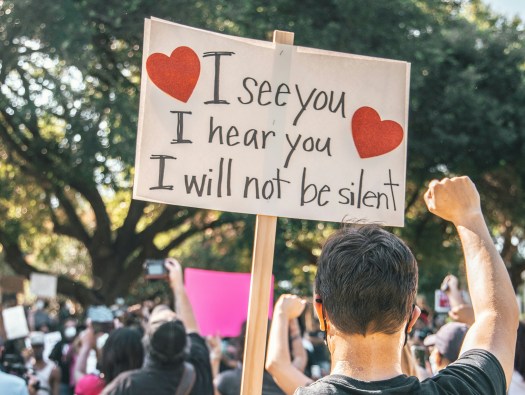
Back in 2015, when I started this blog, I had dreams of saving the world, of being a force for good – of fighting wrong and helping change the world for the better.
I wanted to help others. By changing systems, by changing society, by helping to break down all of the barriers and injustices that hold people back, that persecute, that harm, that stand in the way of human dignity, equality and peace.
And back in 2015, I may not have agreed with the concept that change starts within. But today I do.
Fast forward to winter 2026, over a decade later, and the words on that leaflet got me thinking about my own journey, both as an activist and on a more personal level towards self-love and self-acceptance.
Today, as I write this blog, I’m a few years off forty, post-burnout and on my own healing journey. Much like the one our Buddhist friend is talking of.
As an activist, I’ve learnt over the past few years that if I want to make a change, I have to change myself first. I need to work for myself and others – but not at the cost of myself.
Burnout, conscious of unhealed trauma and at crisis point, I had to step back to heal myself, to love myself. And in doing so, I’ve had a radical change of thought: I want to work from the bottom up. Starting with people. 1-2-1. And, I want to become a psychotherapist.
I want to give other people peace of mind, a space to nurture and love themselves. To heal from the injustices of the world, but also closer to home. To understand the psychology behind harmful socio-cultural norms and generational trauma, to help heal and advocate for change.
Taking time out to heal, to step back, and to pause can be challenging. You wonder if you’re losing time, touch and, if you’re not making an impact.
Self-care is selfish, right? Well, you can’t pour from an empty cup as they say.
Activism was – and is – so often about fighting the negative. It requires anger, energy – and it’s draining.
But in a generation of burnout millennials – aka “the burnout generation”, why has self-care been deemed selfish? As though in helping others, we can’t help ourselves.
Yet, quite crucially, we can – and must:
“… remember that replenishing your cup isn’t just a luxury but a necessity.
Self-care is not selfish… it’s about… honoring [sic] your needs with the same tenderness and compassion you give others.
Self-love and these small acts of kindness allow us to appreciate how we provide to others… showing up for yourself is just as important as showing up for others. You deserve it.”
The bedrock of society is the Golden Rule: love your neighbour as (you love) yourself.
Presumably therefore, we need to want good for others, as we want for ourselves. And this involves sharing, mutual empathy and compassion.
But what if you don’t love yourself? What if you hold yourself to a lower standard than others?
What if you don’t know what love – for the self – really is?
And that’s the point – and where the Buddhist teaching comes into play.
If we want a peaceful more just society, we need to start with us as individuals. Because the world needs healing – from the inside out.
From the inside out: projecting one’s own pain
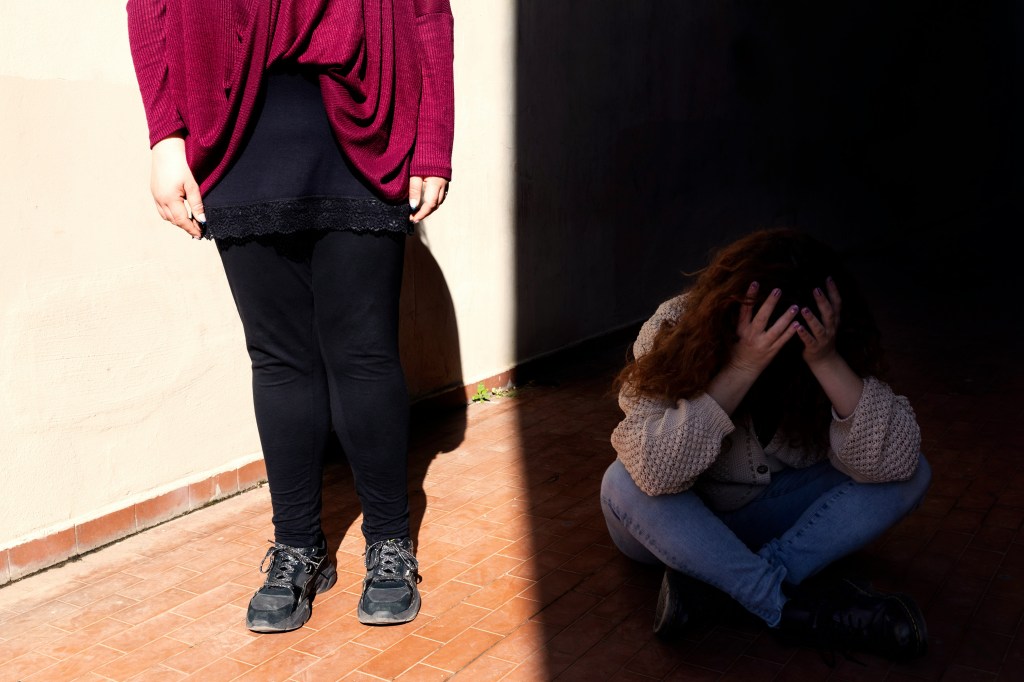
Just as I’ve had to reflect on the need for self-love and my tendency to over-give, to people-please and to prioritise the needs of others (often at the detriment to myself), there’s the other side of the coin: those who treat people unjustly.
Whilst some people, we could argue are simply selfish, self-centred and not focussed on loving their neighbour; I believe it’s more complex than that.
Here too, we see a lack of self-love, of self-understanding and self-compassion. Of unmet needs, of insecurities, of vulnerabilities that challenge, and are masked and projected through fear and/or learnt behaviour.
Far fetched? Well, not really. Let’s go back to basics.
Looking at the effects of injustice, I’ve lived and witnessed – on small and large scales – and understood how they all reveal one thing: a happy person wants a happy world.
And an unhappy person becomes the bully. The insecure critic is the narcissist afraid of vulnerability. The selfish individual is the scared child protecting their own fears and anxieties.
Bullies – young or old – are unhappy. And unhappy people make other people unhappy.
To put it simply:
“When we have no happiness within, we have no happiness to give others.” (Ajahn Brahm)
Of course, this doesn’t mean forcing oneself to forget our troubles. Emotional validation is key to understanding, accepting and making changes where needs be, regarding oneself and others.
But happiness comes from within, not in the material, but in peace of mind, in wanting more, in self-love.
Without a doubt, that’s very easy to say for someone sat writing from the comfort of their friend’s home, mid-March 2026 in the UK – far from conflict, natural disaster and violence.
Yet by happiness, I do not mean full satisfaction in the now, in our circumstances, in our past and present, but in self-acceptance.
And in self-acceptance, we can want and fight for better for ourselves, because we love ourselves. For justice, for equality. For positive change, not through fear, violence or distrust. Because, our starting point sets the tone for our behaviour.
If we want good for ourselves, in empathy and compassion, we will want the same for others.
So, for those who act in entirely opposite manner; who promote and/or perpetuate inequality – corruption, greed and violence – who want to deny, hurt and harm others, we need to ask: why?
Why do people harm? Are they innately “evil” or “selfish”? Or, in fact, are they lacking in love for others because they fail to love themselves?
And what is the cause? Trauma? Learnt behaviour? Filling a void?
Well, everything goes back to the self.
Of course, some people can be just selfish (and actively choose not to care). But what about those who are lashing out in fear or anger? And in fact, grief?
What about those who don’t know how to love their self?
Who were never taught self-compassion? Whose caretakers taught rejection, self-abandonment and mistrust?
Lived experience, learnt behaviour, trauma (during early childhood in particular) all affect how we feel about ourselves. Our fears, our anxieties and our behaviour. And this affects both how we treat ourselves and others.
It shows in our ability – or inability – to draw healthy boundaries, to show compassion and to empathise.
In short: to love ourself and others in a healthy manner.
Looking deeper, if a person gains – or appears to gain – satisfaction in hurting others (the bully), what are the possible cause?
Well, according to psychologists, bullies seek to hurt others (consciously and/or unconsciously) for a variety of reasons:
- Wanting to knock people down to make themselves feel better – due to low self-esteem
- The effects of trauma – culminating in aggression and emotional dysregulation
- Learnt behaviour – as a defence mechanism for example
- Due to a lack of empathy
Empathy in particular is critical to human connection. It’s the personal touch that crosses barriers and boundaries abound, whatever our culture, our religion, our nationality, our age or background.
For whilst we may worship differently from one another, hold different histories and live different narratives, we all feel: we laugh, we cry, we smile.
And that’s they key: we may not always “speak the same language” – literally and figuratively – but we all feel.
As we seek happiness and joy, so too does our neighbour. And as we feel pain, again, so too does our neighbour.
Whilst some of us may be learning to love ourselves and others, what then of those who can’t – or don’t – share the same search for shared human compassion and empathy?
Well, lack of empathy can be an indicator of many issues.
Firstly, “dog eat dog” mentalities prioritise the self at the expense of others.
In the “first world”, it’s evident in rampant individualism at the expense of a sense of responsibility for others, for our communities and wider society.
In other areas, it’s survival. It’s the effects of trauma, of the pressure to “provide and protect”, to put food on the table.
And this is where anxiety and generational trauma fuel socio-cultural norms that perpetuate self-sacrifice at the detriment of the individual. Where misogyny in favour of the masculine provider – and in fear of the role and safety of women – put men on a pedestal.
This can result/co-exist with narcissism: where the world resolves around the self – having been put on a pedestal by parents and wider society – at the expense of others.
Misogyny and Narcissistic Personality Disorder(NPD) are two separate issues, but they can (and do) overlap, with varying causes:
Misogyny stems from: trauma, parenting, social norms and beliefs and inner anxieties (often overlapping)
Narcissistic personality disorder can be caused by: genetic factors, social and cultural factors, childhood experiences (trauma) and parenting
The narcissist, as a result, may show as a person who: is self-centred, manipulative, lacks empathy; who fails to take accountability; is self-entitled, envious, exploitative; and yearns for admiration, attention and appreciation.
On the outside, it looks as though a narcissistic individual harms others because they love themselves so much. In reality however, we see a deeper sense of insecurity, a lack of self-compassion and a deep desire for acceptance – all whilst fearing vulnerability.
Not very happy and peaceful, right?
But what about those who refuse to perpetuate generational trauma? Who choose to not repeat unhealthy learned behaviours? Because being abused, isn’t an excuse to abuse others.
Well, in reality, it often doesn’t become one. For whilst trauma can have this effect, for certain individuals living with the effects of (complex) trauma, facing hardship or pain may result in numbing one’s feelings, “shutting off” and zoning out to cope with the day-to-day.
Yet, in reality, such lived experience can – and often does – actually make us more empathetic.
In learning, understanding, healing and reflecting, as trauma survivors, we often want better for our selves and specifically others – as research explicitly concludes:
“Experiencing traumatic events as a child is predictive of higher levels of depression in adulthood, and also predicts higher levels of aggression, violence, personality disorders, as well as several physical health problems.
… different types of traumatic experiences may affect people differently—and that the more severe these traumas were, the more likely the person is to have higher levels of empathic concern and caring for others, as an adult.
… people who have experienced adversity in life are more likely to demonstrate compassion and support to others who are suffering. People who have survived hard things are more willing to reach out and help others who are struggling…
Surviving childhood trauma increases our ability to feel what others feel, and helps develop our ability to put ourselves in the shoes of others.”
Survivors (typically – as we cannot over generalise) want good for others exactly because they feel, they’re aware and they empathise with others as a result of their experiences.
That’s a proven fact.
The ripple effect: how to creative positive change

If we want a more peaceful, cohesive society, we therefore need to love ourselves and our neighbours, right? But what does that look like in practice?
How do we balance loving each other, without being driven to immense self-sacrifice (burnout), nor fostering ego-driven (selfish) divisions and inequalities?
Well having purpose heals, but it must start within. I remember a song I used to be very fond of entitled “Healing” by Sami Yusuf song, where he proudly declares: “Heal and you will be healed”. Correct, it is a healer. But we in our own right deserve happiness.
We also can’t pour from an empty cup. Just as a professional therapist needs therapy to offload the trauma of their client, so too does an activist, a social worker, a campaigner, and a neighbour need time for self-care.
So, as a society, we need to be sure that we’re treating ourselves healthily and then modelling that same care to others.
And along the way, as people project onto others their own pain, we must break the cycle through compassion, empathy and justice.
In short: be the change you wish to see.
And as the ripple effect shows, change starts firstly with us, then in influencing those immediately around us, followed by within our wider community.
Often through small changes – honest, meaningful and consistent ripples – we can make the most (accumulative) impact.
So here are a few critical (overlapping) pointers to get started:
1. Firstly: step into self-love
Take breaks, set healthy boundaries, work to change attitudes and norms by modelling, demonstrating heathy leadership and radical self acceptance.
If you want to help others, make sure you’re ok first. No, it’s not selfish. We can love one another and ourselves too!
2. Secondly: self reflect
Self-care means nurturing ourself to be the best we can be. And that means, striving to be a kind just person.
So, it’s time to look within and seek support where needs be, reflecting on questions like:
Are we just in how we talk to others?
Do we need to better self-regulate?
Do we need to heal our inner child to to enable to vulnerable with others, to show compassion and to not act out of fear?
There’s lots of help out there. And it’s worth the time and investment where possible.
From (free) online resources to professional therapy, knowledge and action are key.
3. Thirdly: actively love your neighbour
Starting from a more grounded happy space as an individual, we can help build better for those around us, our community and our society.
In your local community: model, lead, educate. Build dialogue, bridges and relationships.
Advocate for change and reject division, “othering” and violence.
Above all, remember: it’s in the personal relationships that you build that you can make the most difference – by being true to yourself and your values.
In wider society: find others to help you take it further, build groups, solidarity networks and advocate for equity, justice, equality together.
Let your values speak for themselves.
And of course, in your pursuit for positive change and no harm, be sure to keep checking in on yourself and others regularly.
For just as loving our neighbour means not actively harming others, there’s another side of the coin to ponder over: are we passively or selfishly harming the cause?
Are we projecting our own anger, grief and/or sense of self-entitlement or injustice onto another cause in a totally different context? Without nuance, without understanding, and effectively being a barrier to peace?
Yes, it’s a three-step cycle – not a one-way journey. And it all starts with the self: self care and love for others, with the same level of love and care for yourself.
So be sure to reflect on your progress and your relationships – with yourself, your family, your loved ones, with neighbours and wider communities.
Be a mirror that inspires. Of truth and true connections across faiths and cultures, from the bottom (ground) up. Start the ripples outwards.
Of course, we’re not going to solve the world’s problems in a day, or on our own. But only by embodying our values, by building a sense of altruism without self-neglect and burnout, by checking for generational trauma, and by building together – from the inside out and from the bottom up – can be make real sustainable change.
Legal structures, investment, resources, and top-down change are always needed. But, the real sustainable positive change can only come when we believe in and embody our values, and we stand as one: aiming high with our feet on the ground, one step at a time.
No man is an island, and by loving ourselves and others, we can build healthier relationships, we can advocate for better and we can (slowly try to!) change the world.


Thank you for sharing something so thoughtful and well considered.
LikeLike
Thank you! I’m glad you enjoyed reading the blog 🙂
LikeLike