

TRIGGER WARNING:
This blog discusses genocide.
A year ago, I travelled to Poland with March of the Living – a Jewish-led charity – on a five-day educational Holocaust educational programme. And a year later, I’m writing this blog.
Why, you might ask? Why a blog? And why now?
Well, I knew when I accepted the invitation it’d not be an easy trip. I’d be joining an interfaith group amid a wider mixed cohort, comprising of Jewish and non-Jewish groups, including footballers and youth groups – and most crucially: survivors themselves.
Not easy, but without a doubt an incredible opportunity.
Having been wanting to go for many years, I knew (to some extent) what it entailed. And last April, I was fortunate to have been invited on MOTL’s programme, consisting of visits to Jewish and historical sites and culminating with a solidarity march from Auschwitz I to Auschwitz-Birkenau.
As you may imagine, it was a life-changing trip which will stay with me forever – exactly because it wasn’t easy – but, I believe, most necessary.
After five long days across cities and sites, moving stories and testimonies, and much anger and sadness throughout, I landed back in Luton.
I found myself sat in a hotel, totally numb. Not just physically tired, but numb from the experience. From knowing the reality of what millions of people (Jewish and non-Jewish) had suffered. Suffered through mass orchestrated genocide. Mercilessly planned down to the last detail. Knowing that my view of the world would never be the same again.
I was exhausted and had to book an extra night to be able to face the journey home to the Midlands.
Of course, we’d been warned about the aftereffects and told to look after our health. I’d therefore expected a meltdown of streaming tears. Instead, I was numb and in shock.
Over a period of five days, we’d seen the train tracks at Birkenau. We’d seen and learnt of how they’d been specifically built to cut down transit time to ensure that men, women and children could be sent straight to their deaths.
We saw the engineering plans for the gas chambers. Chambers that German engineers had been commissioned to design by Hitler himself.
We saw the gas canisters. Empty and used. We saw the tallit (prayer shawls) that had, in hope, been carried into what was believed would be “exile”.
We saw and stood in shock at the shoes, the handbags, the glasses, the human hair. At the utter depravity of it all.
We saw the worst of humanity. And we saw the strength of humanity.
Strength and solidarity were evident when visiting, for example, the village of Markowa in south-eastern Poland. Here, we learnt about the Ulma family and how they’d so bravely risked their lives to save their Jewish neighbours.
Now recognised as Righteous among the Nations by the Holocaust museum Yad Vashem, husband and wife Jósef and Wiktoria – along with their six children and unborn baby – were subsequently killed as a result.
The Ulma family make up over 7,000 people from Poland who have been recognised as Righteous among the Nations for saving the lives of members of the Jewish community during the Holocaust (a title honoured to specifically non-Jewish individuals).
This was a family that I’d known nothing about before my trip. And their story was one of many – Jewish and non-Jewish – which we learnt of over the course of our five-day journey. One of memory, emotion and commemoration. Strength, courage and pride.
As a woman who’d spent the last 14 years as a Muslim, I was joining a group of faith leaders and activists (including Christian, Sikh, Jewish, Buddhist and Hindu participants). And I had a lot to learn.
I felt incredibly privileged to join the Jewish community for such an intimate moment. To be welcomed into their space at such as poignant time.
After several days of learning and reflection, we concluded the trip by joining people from all over the world to undertake the March of the Living.
Led by survivors, we physically walked the same route as the death marches, retracing the route that the Nazis – knowing that the end was nigh – forced tortured, starved and emaciated prisoners to walk to their death (to be shot – if they didn’t die during the process).
During this 3km march of strength, solidarity and commemoration, we saw celebration of life, commitment to survival and, in particular, the determination to refuse to be cowered by hate – in our case, including post-October 7th 2024.
We saw grief. We saw smiles, tears – and sad to say, we also saw abuse (yes, there really were pro-Palestinian protesters hijacking the march).
It was a once-in-a-lifetime trip. Because, whilst I’d been to Auschwitz before, I’d not joined a Jewish delegation with survivors of first, second and third generations and a living community who carry the aftereffects every day.
What’s more, the trip offered the opportunity to attend a remembrance ceremony in Birkenau itself on Yom HaShoah (Holocaust Remembrance Day) – the specific remembrance day in the Jewish calendar – on the 80th anniversary of the ending of the Holocaust, and six months since the atrocities of October 7th.
In the end, the ceremony was cut short as the skies opened and – for the first time in 30 years – it rained. Heavily. It poured, and poured, and poured. And it was all very surreal.
Despite the plastic cagoules and the determination to see the ceremony though, we eventually had to leave. It was pouring, thundering, and impossible to stay.
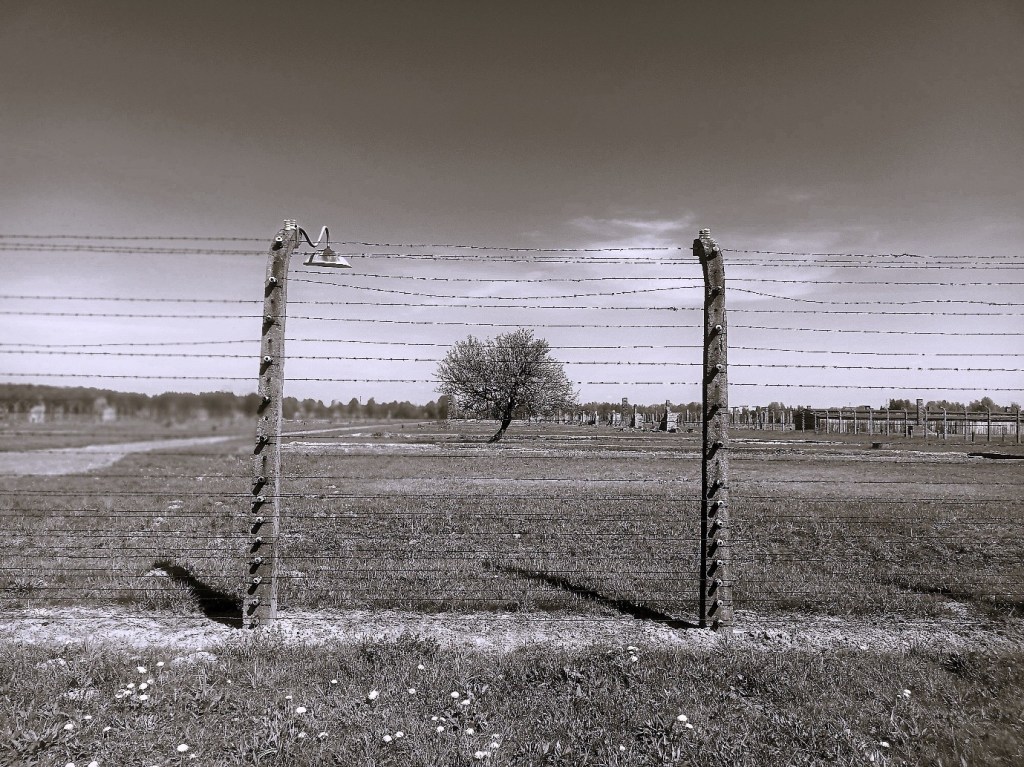
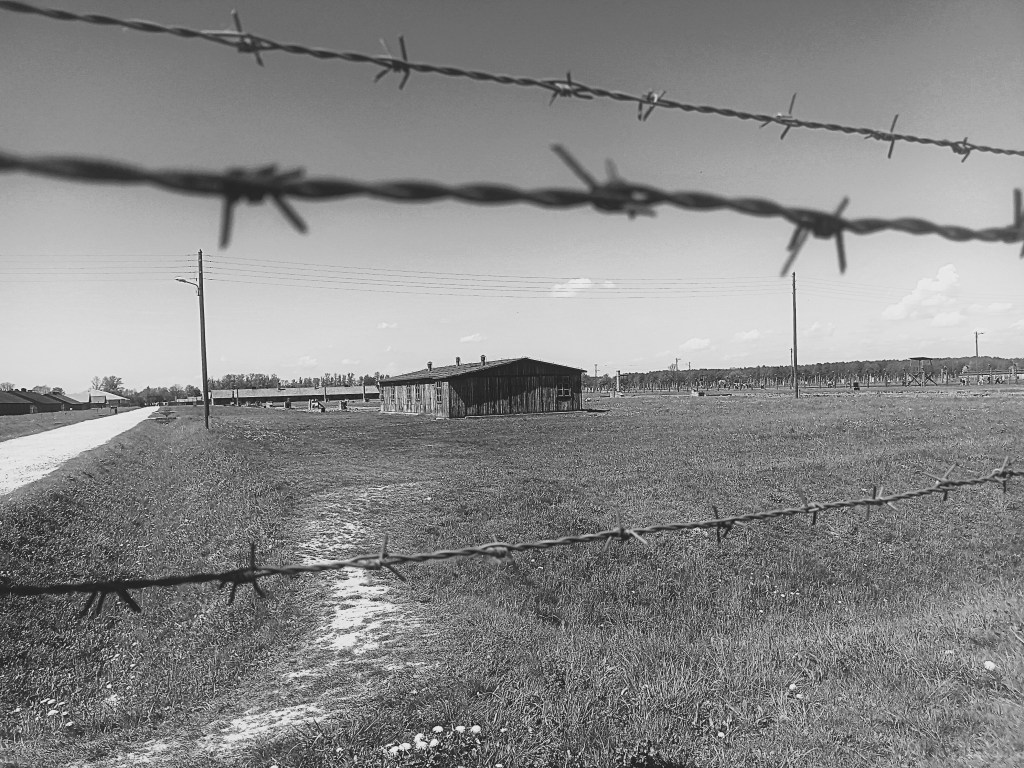
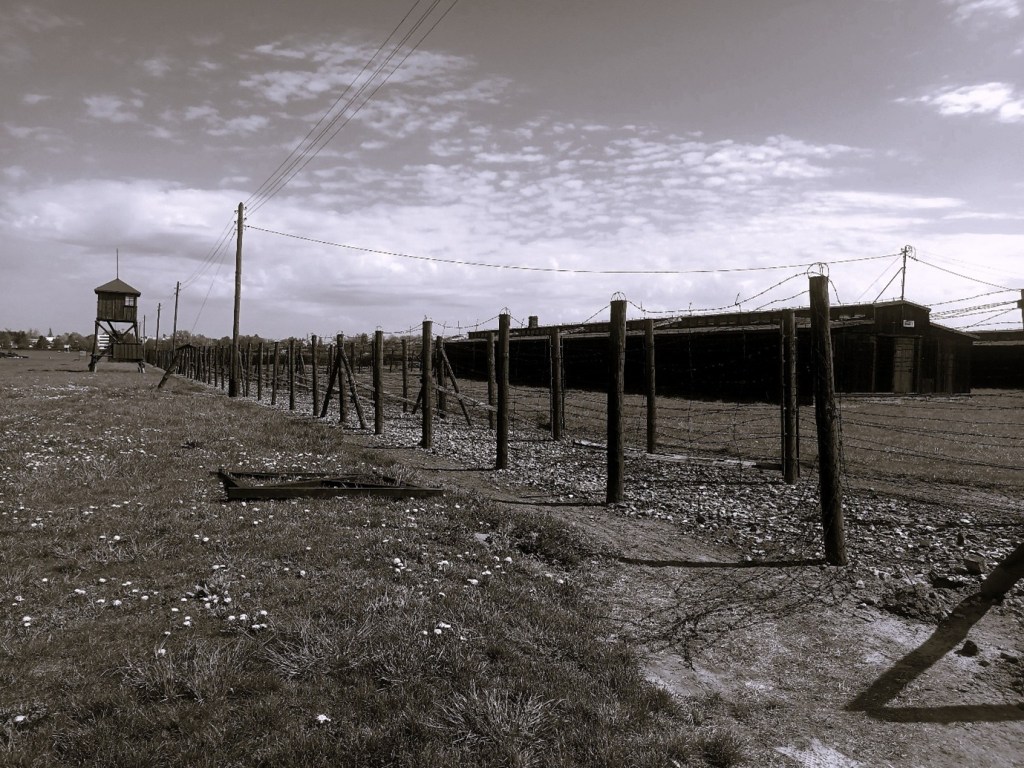
Walking through the gravel and mud – with the train tracks (where new arrivals had learnt their fate) to our left, and the wooden huts (where prisoners had been kept in spaces not even designed for animals) to our right – we were headed to the gates towards the exit.
The rain fell above and behind us, ever heavier and heavier. We were drenched.
My feet sat inside small pools of water within my boots. And I began to ponder. These few minutes of discomfort would be nothing, absolutely nothing to the people who had once been in these camps.
I’d always seen water as a blessing. And I honestly couldn’t help but think of the surrealness of it all. Water. Life. Two gifts from God denied to so many. In the very spot where were standing, and making our exit.
Crowds of people stood at the gates, waiting for the coaches to arrive, as we’d all be soon leaving. The people before us never did.
Drenched through, we hopped on the coach, attempted to dry off and headed back to the hotel to change. And later that day, we flew home.
Photos and memories in hand, I planned to write up my trip. But, it never happened.
Too busy, too tired, too distracted, I kept pushing it back in my digital calendar. And a year later, when I saw the next cohort travel to Poland, I knew I had to do it.
And so, I forced myself to sit and to finally tackle my long overdue task. But (very much unlike me), whilst I had plenty of feelings, memories and stories, I had no idea what I could possibly write about.
What could I add to the conversation? How could I describe it all? How could I make sense to others of such an intense experience?
I started by revising the itinerary and historical facts. And then felt a block. Writer’s block. So, I switched to my photo bank instead.
And that’s when it hit me. The pain, the shock, the horror. It was like revisiting Poland all over again.
Each time I’d go back after a much-needed pause, the anxiety would lay heavily, pressing on my chest. A grimace, a sigh, and pause after pause later, my friend in the next room remarked how he could hear me. And then, it hit me:
“I think I may have subconsciously been avoiding writing the blog” I confessed. He undoubtedly agreed.
We all take different times to process things, and I’d clearly taken longer than expected. Much longer.
Photo after photo, as I selected and edited each image over and over, I remembered the places we’d visited, the stories we’d heard and the people who’d been mercilessly massacred, all for being Jewish.
And that’s when I had another thought: a week after visiting the Beit Din, I was now officially Jewish.
Of course (to my knowledge), none of my family were directly harmed during the Shoah (Holocaust). And, whilst I’d grown up aware and sympathetic to the Holocaust, I’d not grown up with the communal history of its trauma.
I’d never understood it in the same way – because I hadn’t lived it or been part of the Jewish community.
This time, a year later, I was re-opening my photo gallery. A year later, I was writing this blog. And a year later, I’m Jewish (my reasons for conversion are not related to MOTL).
Yet, this time it was different. It was more personal. Deeper, more bitter, more painful.
And that’s when I also realised: I’m glad I went last year. If I’d have been this year, it’d have been so much more raw.
Not because I care more. A human life if a human life after all. But, because the connection is different.
And thus, I realised that I did have a topic for this blog: the very journey of pre and post-MOTL. Of processing and of documenting. In many ways.
Because it beggars belief: how can you possibly put into words the horrors of the Shoah and covering its trail in five days?
How can you explain? How can you do it justice?
Of course, each time you visit, you understand more. You learn more.
And you also understand that you’ll never truly understand. Because our brains aren’t capable of taking it all in. It’s incomprehensible to the human mind.
However, what I do have to portray my experience is my photographic images. And as a writer, I realised that this time, perhaps my images would do a better job at this specific task.
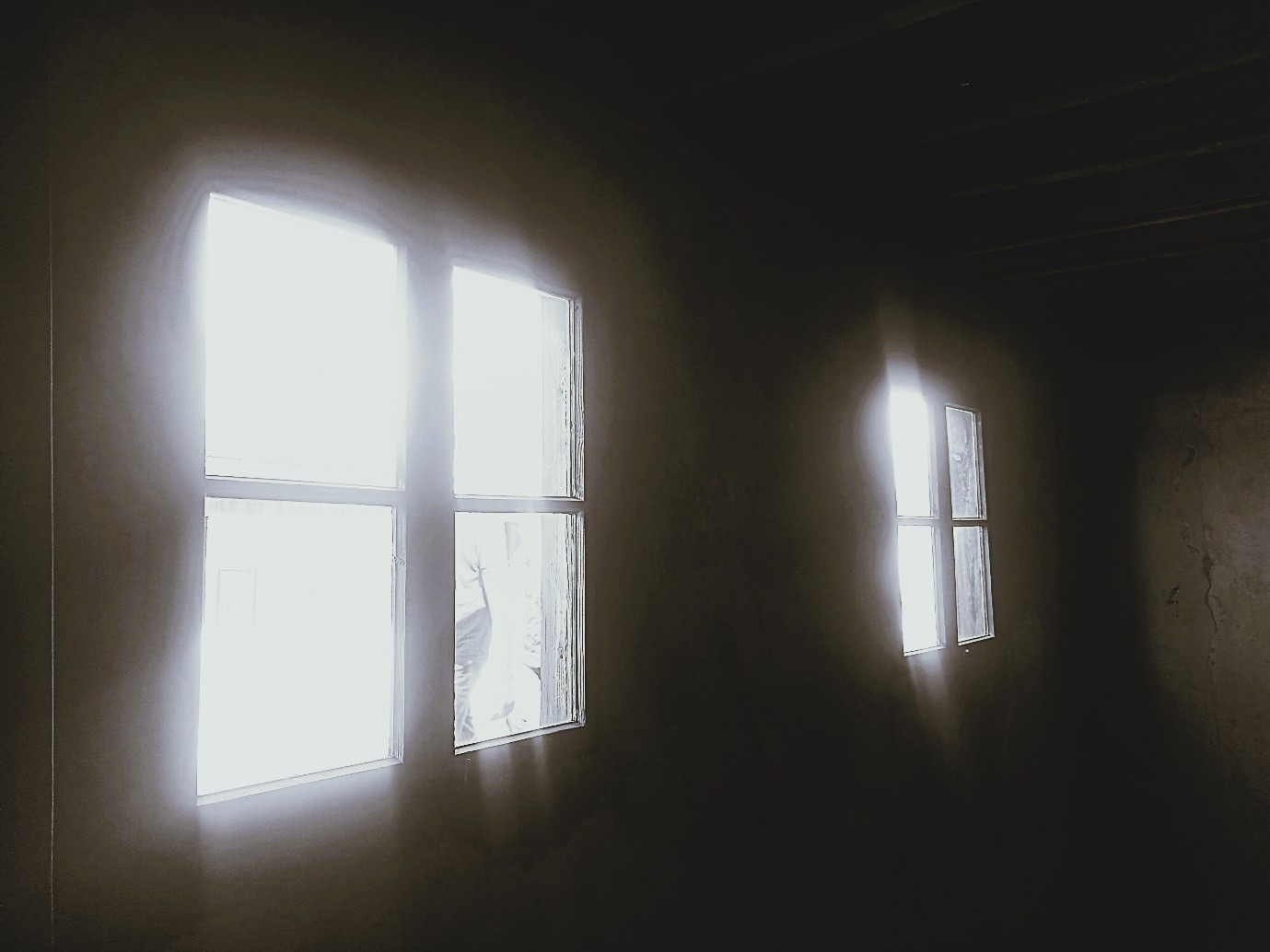
Perhaps, as they say, they’d be worth a thousand words and could – this time – do the talking. Not for their bright colours, for natural scenery or many of the things that are often deemed to make a “great photo”, but for the pain, the truth and the reality that lies within them.
The shadows. The darkness. The stillness. The memories.
Photo after photo, as I began to select and edit each one for my Flickr album, I therefore began another (quite new) reflective learning process:
How do we commemorate genocide through imagery?
How can we make “beautiful” photos of such a horrific topic?
How can we do justice to the memory of those who were lost?
Colours became sore to the eye. Too “pure” for such a putrid world. And also, too real…
For the more images I began to edit, and the more I’d go over each one, the more I realised how I became uncomfortable with colour in this context. I yearned to replace each shade with blacks, whites and greys.
It was as though I wanted to somehow make the subjects of each image not just sharper, but as morbid as their histories, and somehow more historic or frozen in time.
They didn’t deserve colour. They deserved solemn respect. And, I wanted to keep them in the past.
But it’s not that simple. For we live in a world of colour.
Colour is our reality. Colour is life. Colour is truth. And I understood that I couldn’t remove their reality, their context, their pain.
I couldn’t go back to the past. I can only focus on the present (the colour that I saw) and the future – the need to remember the past.
The sites exist in colour, because their remains exist. Their remains are present. And they must never be forgotten.
And that was my task: to balance the very real truth and pain of the past, and the reality of the living present in terms of genocide commemoration and education.
To balance the need for colour – for reality, for now – with the need for black and white – for historical memory, for painful truth and commemoration.
For only by putting the past in its full real context – past, present and future – can we honour those who so were tragically murdered. Those who are still living with the effects today.
And those who we hope can live in a future where we’ve learnt the horrors of the past, where we reject hate and where we’re committed to building a better, more cohesive society.
By learning about the Holocaust, by visiting memorials and historical sites, by commemorating its victims (paying tribute to those who were killed, supporting survivors and standing with living communities against hate), we can make a difference.
We can pay respects to those who lost their lives, to their memories, to their ancestors and to wider society.
Because humanity deserves better.
By going on March of the Living, by commemorating Holocaust Memorial Day, and by standing up against Holocaust denial, misinformation, antisemitism and all forms of hate; by visiting, seeing and learning of the horrors and advocating for community, harmony and peace, we can embody the actions behind the promise of Never Again.
Because, the world has uttered these words time and time again. And time and time again, we’ve seen violence, dehumanisation and hatred. In Rwanda, Darfur, Cambodia and Bosnia.
We must never forget. And we must carry on striving for better. By standing as witnesses, as allies, as neighbours, communities and humans committed to Holocaust and wider genocide memorial and prevention.
Committed together to a world against hate. Will you join me?
I’d encourage you to view the full album of the photos from my trip, which can be viewed here.
It’s not easy viewing. But – I believe – it’s essential.
When asking a friend to review the album, she quickly responded: “Horrific but beautiful at the same time and that is just the first page. More than one page is too horrific for one night.”
And that’s the reality. Please do view, share and find out more (further information is available at the end of this blog).
I truly hope that this small snapshot of my five days in Poland does some justice to the work, commitment and dedication of survivors, the MOTL team, the Jewish community and wider Holocaust educators in keeping history alive for learning and prevention – no matter how painful it is.
And it is, truly.
May we all work together for a better future.
#NeverAgain
Dedication and thanks
I’d like to give a huge thank you to the March of the Living staff and volunteers who travelled with us, including our educator Richard, guide Talia and accompanying rabbi, Rabbi Harvey Belovski. Your passion, dedication and commitment are clear for all to see and truly admirable. Thank you.
A massive thank you also goes to the wider MOTL team (and funders) for their incredible programme and their kind invitation to MOTL 2025. You allowed me to be part of such an intimate space and the trip and its memories will stay with me forever. Thank you.
Further information
March of the Living run a five-day trip to Poland as part of their Holocaust educational programme.
Background:
Before WWII, 3,500,000 Jews were living in the Poland Second Republic – around 10% of the population. During WWII, 90% of Polish Jewry perished (between the September 1939 invasion of Poland and the end of WWII).
Today, the Jewish population of Poland is estimated to be around 30,000 (out of a total 38, 115, 000).
Programme:
Monday (Warsaw):
- Nozyk Synagogue
- Polin Jewish Museum
- Heroes Path
- Ghetto wall
- Survivor testimony
Tuesday:
- Majdanek death camp
- Markowa – visit to museum for the Ulma family
- Zbylitowska Gora (memorial site of mass executions)
Wednesday:
- Birkenau (death camp)
- Auschwitz Museum
- Kazimierz (Jewish Quarter) – including local synagogues
- Jewish Community Centre (JCC)
Thursday:
- Krakow Ghetto
- March of the Living
A full album of images from my trip can be viewed via my Flickr Album (March of the Living, 2025).
For more information, please visit March of the Living UK
*Statistics: March of the Living UK (2025)

 Voice of Salam
Dear Elizabeth Thank you so much for this very moving and powerful account of your time with the places of Holocaust last year. I visited Auchswitz Birkenau a couple of times, once also in a group of people of different faiths and led by Rowan Williams and Jonathan Sacks. You mention the piles of shoes and spectacles once worn by ordinary women, children and men and like you, the sight has left indelible marks on my soul Now when I visit European cities, I look for the remains and memorials of the Jewish communities that once lived there. I am at the moment on my way back from Latvia where I visited the one remaining of 40 synagogues and in the small town of Cesis, I found the memorial they had chosen to keep the memory of the small community of 200 Jews who had been murdered. The shoes have been placed outside the houses where Jewish families lived rather than create one central memorial. It was so heart wrenching and reminded me of Budapest where there are also rows of shoes alongside the Danube where Jews were shot into the river I work to build relationships with our Jewish communities in Bristol where we now live, often joining the two shuls for Shabbat services. I do so appreciate the ways in which our Christian scriptures and worship are so entwined. I gave an offering recently to a Jewish society here on the sibling origins of rabbinic Judaism and the the early Jesus movement out of their common parent, second temple Judaism All this leads me to say how interested I was to read your understated comment that you have converted to Judaism. May that be a blessing to you With warm good wishes Guy
Sent from Outlook for iOShttps://aka.ms/o0ukef ________________________________
LikeLike
Thank you Guy for such a beautiful message and for your continued support 🙂
LikeLike